

Throughout my career, I’ve seen how profoundly the built environment shapes the way people connect—or fail to connect—with one another. The design of our cities influences not only how we move through space, but also how we interact, build community, and create a shared sense of belonging.
Over the past century, many planning and development decisions—whether car-centered road networks, expansive suburban growth, or an emphasis on private rather than public amenities—have unintentionally made social connections harder. We’ve engineered convenience and efficiency, but in the process, we’ve reduced opportunities for people to casually bump into each other, gather, and build relationships in shared environments. These decisions have only increased isolation in recent decades, as people rely more on digital alternatives to in-person socialization, recreation, and community building. As a result, our nation has grown more physically separated and socially isolated, weakening its resilience to local conflict and national threats to democracy.
Parks, plazas, coffee shops, libraries, and recreation centers offer more than beauty and amenities; they provide the physical backdrop for daily encounters that weave together a community’s social fabric. When communities overlook or underfund these shared spaces, they create not only physical gaps in neighborhoods but social ones as well. Thoughtful design and investment drive greater use and deeper community impact, while neglect and deprioritization create a cycle of reduced participation and diminished outcomes.
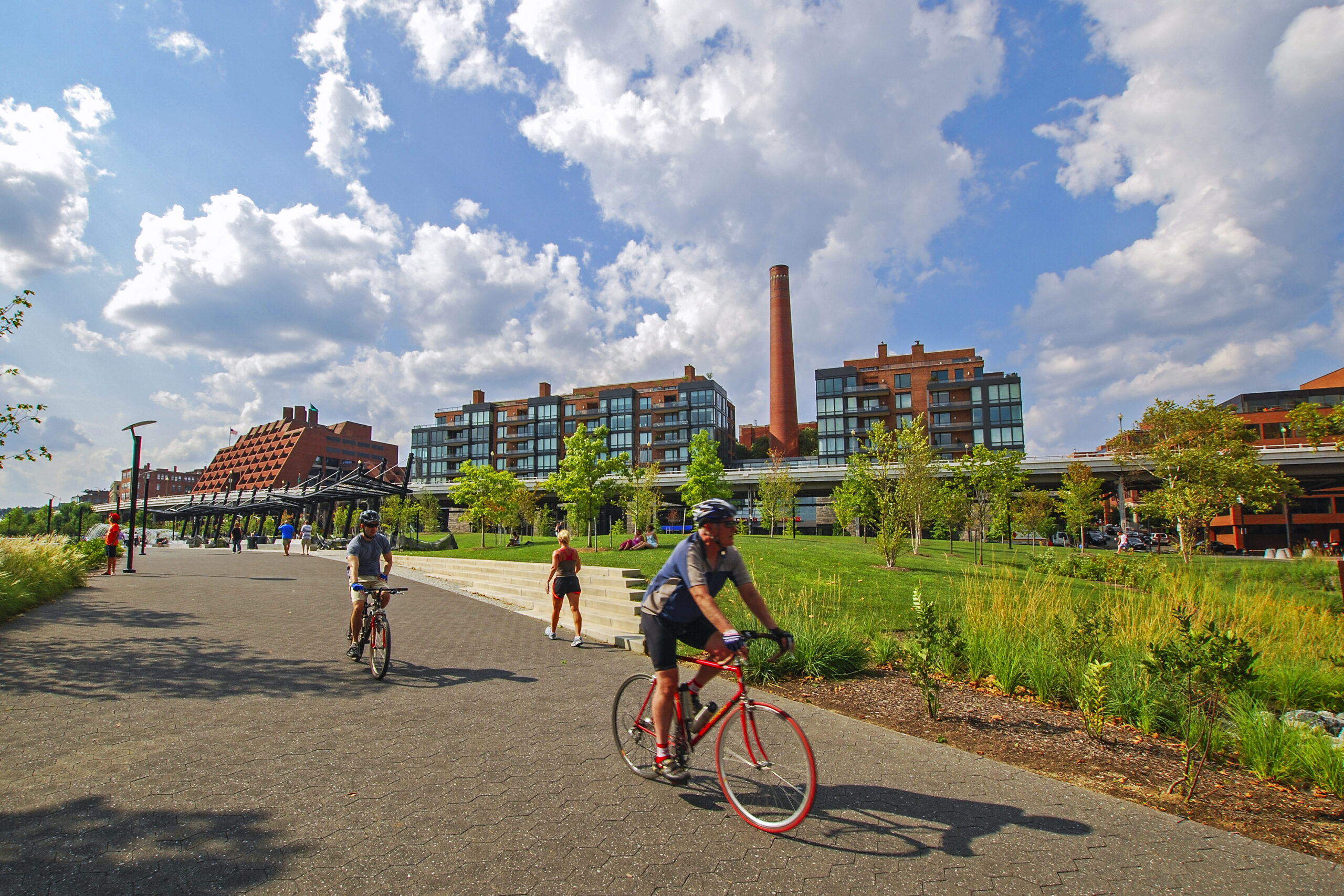
We now face an opportunity. Cities everywhere are rethinking how to revitalize civic spaces. From waterfront redevelopment projects that open access to all, to mixed-use districts that blend work, living, and leisure, to investments in walkable streets and transit, we can see how intentional design reconnects people. These projects show how the built environment can serve as the stage for public life.
Parks and Recreation Departments, Library Systems, Business Improvement Districts, and other entities act as central players within the publicly managed segment of social infrastructure—what we also call civic infrastructure.
Civic spaces form more than a network of institutionalized third places in communities across the country; they create a web of existing, funded, and empowered organizations and assets committed to serving the public. Municipalities that design, implement, and operate these public social spaces sit at the epicenter of building social capital and increasing civic engagement—both critical to sustaining a healthy and resilient democracy.
When organizations isolate these assets or add pressure without support, they diminish the elevated value of these spaces. Buildings may prioritize staying open over making an impact, success metrics may focus more on process than on outcomes, and “nice to haves” may fall behind “need to haves.” Individuals and organizations that champion, fund, or improve these facilities shouldn’t have to do the work alone.
At B&D, our mission has always centered on helping institutions and municipalities create places that strengthen connection by focusing on outcomes. Living that mission also means asking, “What can we do together that we cannot do alone?” We believe that when we design and invest holistically in shared environments, we stitch back together not only our cities but also the relationships that sustain them.
The future of cities depends not only on their places and spaces, but on the experiences they enable. Everyone involved in planning, design, and development must ensure that social and civic infrastructure succeed in creating places that bring people together.
Ellery Ammons is a senior associate in B&D’s Washington, D.C. office, where she provides planning and strategic advisory services to colleges and universities. With a background in both urban planning and management consulting, she takes a people-first approach to transforming places and organizational processes. Her experience includes strategic planning and performance management for military clients, community engagement and economic development for a Business Improvement District, and guiding higher education institutions through complex planning challenges. You can read more about Ellery here.


