

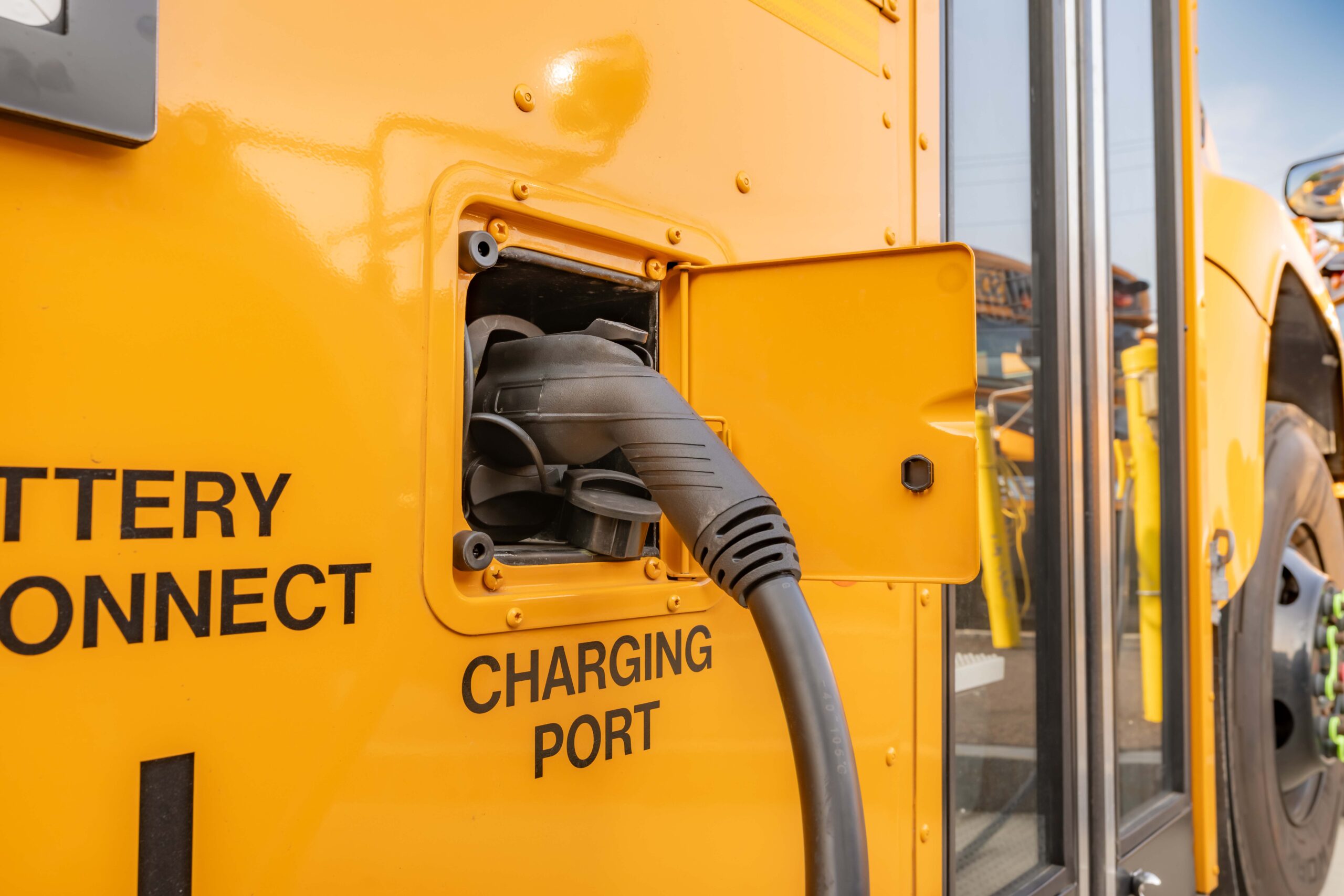
As someone who has spent years helping schools navigate a path to sustainability, I know firsthand how complicated it can feel to balance tightening budgets, ambitious climate goals, and an ever-changing political climate. If you’re a school district leader in the Mid-Atlantic, you face those competing pressures every day. And nowhere do they come together more clearly than in the effort to electrify your school bus fleet.
On B&D’s Campus Energy and Sustainability podcast, I recently spoke with Jason Washington, associate superintendent of supporting services at Prince George’s County Public Schools (PGCPS). His district, one of the largest in Maryland, has already put 21 electric buses on the road and is planning for many more. What struck me most in our conversation was not just the progress PGPCS has made, but the lessons that can help you as you consider this journey for your own district.
Electrification works best when it’s part of a broader sustainability strategy. For PGCPS, electric buses were written into a climate action plan alongside goals for net zero schools and compostable food service. But what really gave the work staying power was that it felt personal. Students ride quieter buses. Drivers receive training that builds their confidence. Parents see their district leading the way on sustainability.
When you frame your electrification plan around benefits like student health, community pride, and educational opportunity, you’re far more likely to carry momentum across budget cycles and leadership changes.
Buying electric buses is only half the equation. Supporting them requires the right infrastructure. PGCPS started with mobile chargers but quickly realized it needed to retrofit a central bus lot into a future-ready charging hub, with microgrids and utility partnerships on the table.
Before you commit to large-scale bus purchases, make sure your charging infrastructure can keep pace. That step will save you the frustration of idle buses and give you the flexibility to grow as technology evolves.
The reality is that electric buses cost nearly three times as much as diesel. For PGCPS, early adoption was fueled by grants and rebates. But as those incentives shifted, the district began exploring alternative financing, drawing on its own experience with public-private partnerships to build new schools.
My advice: don’t count on grants alone. Look at how you can leverage fuel savings, lower maintenance costs, and partnerships with utilities or private firms. These creative financing models are how districts like yours can make electrification sustainable for the long term.
From my conversation with Jason, three lessons stand out:
And remember: this isn’t just about buses. It’s about creating opportunities to engage students in STEM education, reduce asthma and other health risks in your community, and demonstrate visible leadership on climate action.
Districts across the Mid-Atlantic are facing the same pressures and opportunities as Prince George’s County. States are setting ambitious climate targets, utilities are preparing for increased demand, and your communities are looking for visible progress. If you take a strategic, phased approach—piloting routes, building infrastructure, and then scaling—you’ll not only meet those expectations but also lead the way.
At B&D, I’ve seen how careful planning, sound financing, and authentic community engagement can turn sustainability goals into lasting achievements. The road to a fully electric fleet may be a marathon, not a sprint. But every step—whether it’s a pilot program, an infrastructure upgrade, or a financing innovation—brings you closer to a cleaner, healthier, and more resilient future.
To hear directly from Jason Washington about how his district is electrifying its school bus fleet, I invite you to listen to our conversation on the Campus energy and sustainability podcast. You can find the episode at campusenergypodcast.com, or on your favorite podcast app.
Dave Karlsgodt is vice president of Brailsford & Dunlavey’s Energy and Sustainability practice, where he leads climate action, energy and utility planning, public-private partnerships, and energy efficiency initiatives. He founded and produces B&D’s bimonthly Campus Energy and Sustainability podcast and is known for distilling complex topics for non-technical audiences and decision-makers. Dave holds a BA from the University of North Texas and completed the Executive Education for Sustainability Leadership Program at the Harvard T.H. Chan School of Public Health. He can be reached at dkarlsgodt@bdconnect.com.


